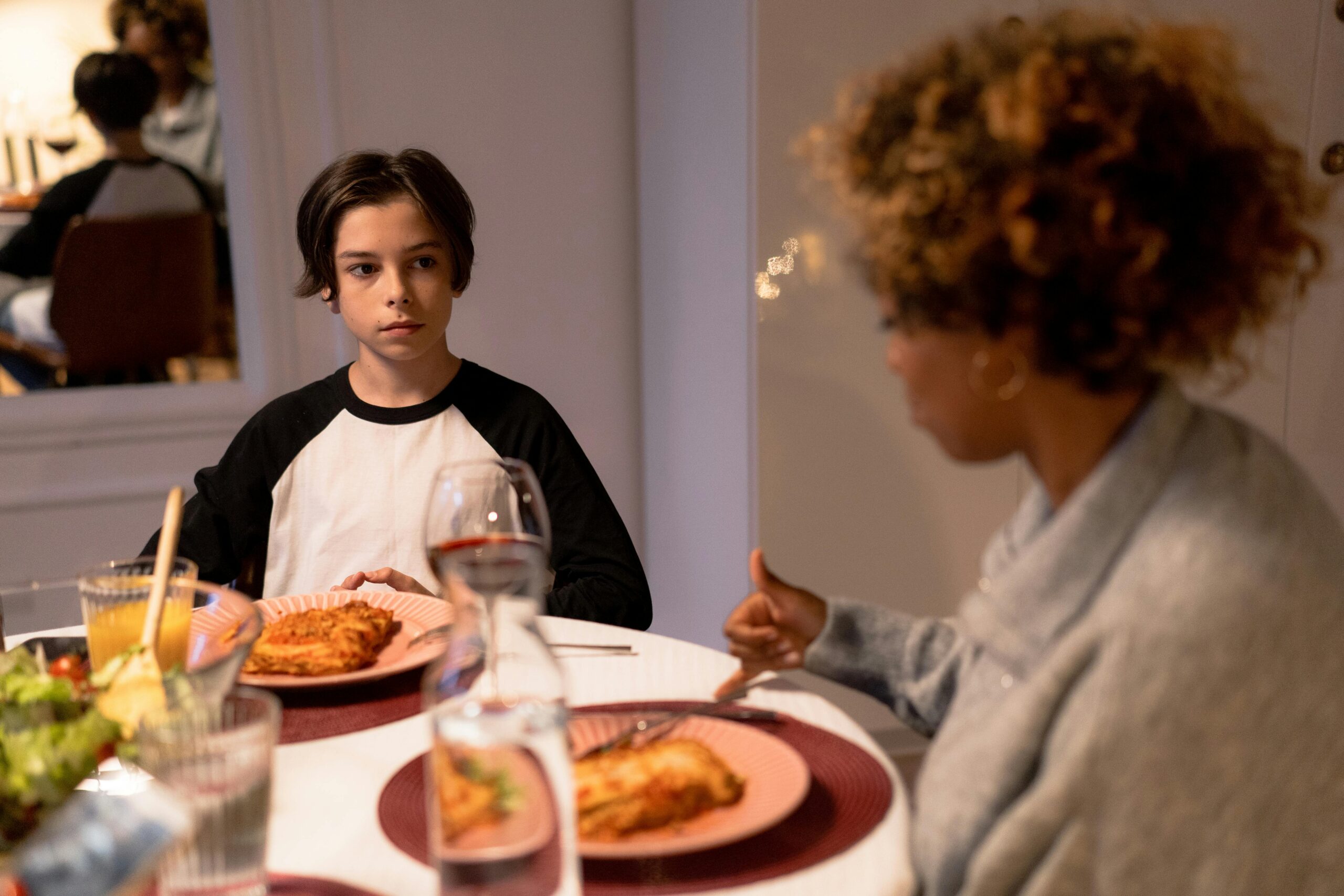
Staying positive in stressful situations is a sign of resilience in children – and it protects against mental health problems.
An examination of how young children react to challenging situations and stress by the Arizona State University Department of Psychology has found that those who can maintain positive emotions during an argument with their parents experience fewer mental health problems, such as anxiety, depressive symptoms, behavioral outbursts and attention deficit hyperactivity disorder.
Because the study participants were identical and fraternal twins, the researcher was able to test for the genetic contribution to experiencing positive or negative emotions during the conflict. There is no genetic influence on maintaining positive emotions.
“This work shows that being able to sustain positive affect, even during difficult interactions, can be an important part of psychological resilience in children,” said Mary Davis, professor of psychology and co-leader of the Arizona Twin Project.
“Parents can give their children the structure they need to learn how to cope by setting consistent and regular limits, giving them positive reinforcement and respect, and being responsive to their needs. And the parents’ own emotional regulation and coping skills give children a model of how to deal with tough times.”
The work, published in Child Development, also uses a novel artificial intelligence-based method to identify positive and negative emotions based on facial expressions.
Nature vs nurture
The 560 children and their parents who participated in this research are part of the Arizona Twins Project, a statewide, long-term study of risk and resilience factors for the mental and physical health of children co-led by Davis, Kathryn Lemery-Chalfant, professor of psychology, and Leah Doane, professor and chair of the Department of Psychology.
Identical twins share all of their genes, and fraternal twins share, on average, 50% of their genes. The daily life experiences of both types of twins are very similar, but not identical: They have the same parents, live in the same neighborhood and more, but may be in different classes at school or have unique hobbies. Comparing the similarities between identical twins and the similarities between fraternal twins allows researchers to determine the influence of genes, and everything else.
The twins in this study were 9 years old when each and one of their parents filmed them having a friendly conversation and an argument.
Identical and fraternal twin pairs were similar to each other in how often they showed positive emotions during arguments, suggesting that genetic influence was not a big driver of the ability to remain positive in stressful situations.
The ability to remain positive during conflict with parents is also associated with children having less anxiety, depressive symptoms, behavioral outbursts and attention deficit hyperactivity disorder behaviors. This protective effect of positive emotions is stronger than the effect of negative emotional reactions during arguments on children’s mental health.
However, when researchers examined negative emotions more closely, they found a different pattern: a genetic component to exhibiting negative emotions during conflict.
“Identical twins in pairs were more similar to each other than fraternal twins in how often they showed negative emotions, which points to a genetic influence,” said Sierra Clifford, a research specialist in the psychology department and first author on the paper.
Arizona Twin Project is actively recruiting families with twins who are 14-18 years old through August 2026. More information is available at https://arizonatwinproject.org/contact-us.
“Even if children’s negative affect is genetically influenced, it does not mean that it cannot be changed. It also does not mean that environmental influences – such as harsh or sensitive parenting styles – are not important for how those genetic effects will appear,” added Clifford.
Digging deeper with AI
Lemery-Chalfant, senior author on the paper and director of ASU’s Child Emotion Center, said the research team would not have been able to identify the link between children’s emotions and their mental health without the help of AI-based programs.
A common way for scientists to study emotion is by filming faces and then examining facial expressions, focusing on the individual muscles in the moving face and how intense the movements are. This is done by scientists who have undergone several hours of training that allow them to recognize how each of the more than 40 muscles in the face move and create different expressions to feel happiness, joy, sadness, anger, shame, fear, contempt, disgust and more.
Because this process is incredibly time intensive, researchers typically focus their analysis on about five seconds of video that occurs after something important, such as a child reacting to his mother having an outburst. The mother-child conflict videos used in this study are seven minutes long, and there are 560 of them, one for each individual twin. This study is the first time researchers have used AI-based software to classify facial expressions – and the program analyzed facial expressions in every frame of all videos.
“They do this in seconds,” Lemery-Chalfant said. “Focusing on just five seconds as we usually do will not be enough time to understand the negative and positive emotional expressions of children during their interactions with their parents.”
This work was supported by the National Institute of Child Health and Human Development (R01 HD086085).
#ability #stay #positive #conflict #mental #health #children