
India is expected to see a GLP-1 boom as Novo Nordisk’s semaglutide patent expires in the country this month. GLP-1s such as Wegovy and Ozempic have made a big impact in the treatment of diabetes and weight loss, especially in the US. The expiring patent marks an important moment for India’s pharmaceutical and nutritional sectors, as local drugmakers have launched and plan to bring cheaper alternatives, thus increasing global access for millions suffering from chronic diseases.
Analysts expect more than 40 local companies, including Alkem, Dr. Reddy’s, Lupin, Mankind Pharma, and Zydus, launched more than 50 brands within a week of the patents. The price is almost 70% to 90% lower than the original drug. Among the lower prices are Natco Pharma ₹1,290 per month (~US$14), to Sun Pharma ₹5,200 per month (~US$55).
Cheaper drugs are accepted in the country, as studies in Lancet reported 101 million people with diabetes and 136 million with prediabetes in India. A Journal of obesity The review article points out that according to the National Family Health Survey of India-5, one in every four Indians has obesity. It predicts that the country will lose nearly US$440 billion, a 19-fold increase in obesity costs by 2060, without public health measures.
Nutritional Insights spoke with India-based food, water, and air testing center Equinox Labs to learn how wider access to cheaper generics could affect eating patterns. With expertise in quality assurance and sustainability, its founder and CEO, Ashwin Bhadri, explains what this means for nutritional quality and generic challenges for regulation and compliance.
How could greater access to inexpensive GLP-1 change eating patterns in India?
Bhadri: GLP-1s will reduce appetite; it’s straightforward. The real risk is that it replaces that consumption in a market like India.
 Ashwin Bhadri, founder and CEO of Equinox Labs.If people eat less without guidance, they don’t automatically eat better; rather, they move towards convenience. And in India, convenience is often in a category with known gaps in cleanliness, counterfeiting, and label integrity. We have tested packaged and ready-to-eat products in several categories, and a significant proportion failed in label accuracy, contamination thresholds, or basic hygiene compliance. That food environment people will tend to gain weight as their intake decreases.
The risk does not decrease with lower consumption. It’s concentration. Each substandard input carries more weight when there are fewer inputs overall. That’s what stakeholders need to focus on: not just feeding the less fortunate, but the more dependent.
What does increased GLP-1 mean for nutritional quality?
Bhadri: This is what worries me the most: when people eat less, they turn to supplements, protein products, and fortified foods to compensate. And that category has some of the worst compliance rates we’ve seen in testing.
We have tested products in protein supplements and fortified foods where the actual protein value has reduced label claims by 20 to 40%. Fortified micronutrients that are on the package but not in the product; The material is not fully disclosed. This is not sometimes; it’s a systematic pattern.
For people using GLP-1, this product is often a primary source of nutrition, not a supplement. If the base is compromised, there is nothing left to make up for the shortfall. So the conversation can’t just be about nutrition; It should include verification, testing, and label accuracy. Otherwise, we’re replacing excess calories with hidden deficiencies.
If cheaper alternatives to GLP-1 become more widely used, what issues are you most concerned about from a public health perspective?
Bhadri: The biggest concern is what leads to a cheaper price point, because in this category, cost reduction almost always means a compromise somewhere in the chain.
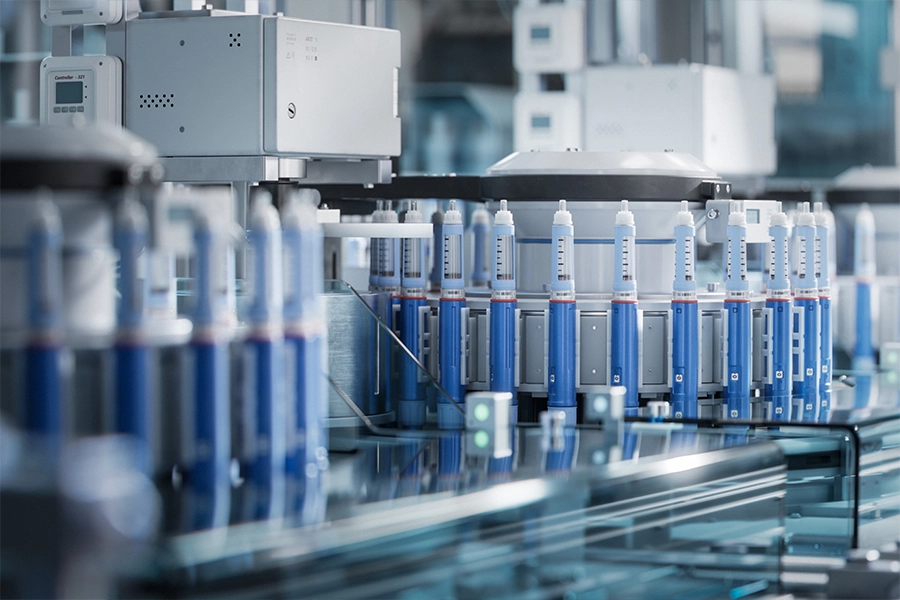 Generic GLP-1 India reduces prices by up to 90% but risks nutritional deficiencies as consumers gravitate towards supplements that may be faulty.This is a very sensitive peptide compound. Small deviations in formulation, storage, or handling not only affect efficacy but also affect safety. And unlike non-standardized food products where the harm is visible or traceable, the poorly produced GLP-1 alternative causes harm quietly, often attributed to something else.
What worries me most from an audit perspective is the combination of invalid manufacturing controls, absence of third party testing, and weak cold chain compliance. India still has a significant distance gap in temperature controlled logistics. A product can leave a facility within specification and completely degrade before reaching the consumer, and no one in the chain is responsible because no one is watching.
This failure is not theoretical. They have happened. The problem is they haven’t been measured.
How can wider access to generic GLP-1 create challenges if regulation and testing are not balanced?
Bhadri: Affordability without supervision is a risk multiplier, and we have seen exactly how this plays out in food security.
When price pressure dominates, labels and products begin to diverge. Without a validated test protocol, there is no mechanism to catch those divergences. In a drug category where dosage accuracy directly affects health outcomes, that gap is unacceptable.
What this compound next is the unregulated use. When there is no medical supervision, no structured reporting, and no tracking of adverse events, problems will not appear until they are at scale. At Equinox Labs, we’ve audited enough facilities to know that compliance failures don’t happen overnight; they build silently throughout manufacturing, storage, and distribution, each step normalizing standards slightly lower than the previous one.
 As cheap semaglutide floods India, Equinox Labs flags adulterated protein and failed cold chain.Self-declaration is not a guarantee of quality. It never was. And in a market set to grow rapidly on the back of cheap access, relying on that is a serious mistake.
Where do you see the biggest gap in making sure this product can be trusted?
Bhadri: To be honest, the gap is not hard to find; they’re just not addressed with the urgency they deserve.
The most basic is the standardized test. There is no widely validated, validated method for testing GLP-1 peptide compounds in laboratories in India. Without that standardization, results vary between laboratories, data becomes unreliable, and regulations built on that data have no real basis. This is not just a small technical gap but the base layer on which everything depends.
The second is a mandatory third party audit. Self-regulation in a price-sensitive, high-growth market does not work. We know this from food safety – the category with the weakest audit culture is consistently the group that fails quality. Independent audits should be non-negotiable, not aspirational.
Then there is post-market surveillance, which is perhaps the most important and most neglected. Once a product enters the market, it generally disappears from regulatory view. Random sampling, real-time testing, and active adverse event tracking must exist as a functioning system, not as a paper. Because when a problem becomes apparent without that infrastructure, it becomes a public health event.
#Cheap #generic #GLP1 #India #risks #nutritional #gap #supplement #quality #crisis