A new type of daily pill has proven to be more effective for weight loss and blood sugar control than its current counterparts, according to a recent trial. The drug, known as orforglipron, could be a game changer in the fast-growing oral weight loss drug market.
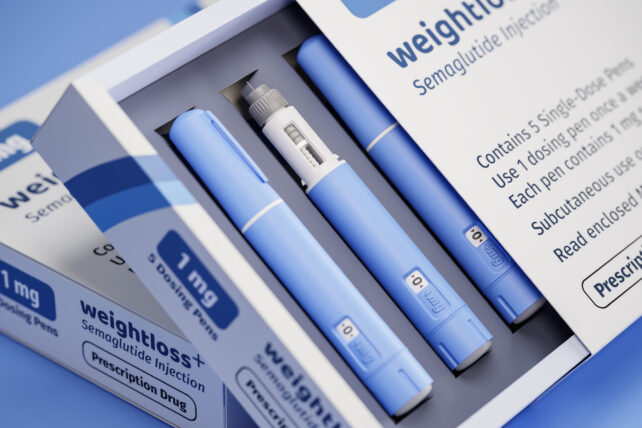
The appearance of injectable weight loss drug semaglutide (better known by its brand name Wegovy and Ozempic) marked a different shift in the market of weight loss drugs when it was available just a few years ago.
Semaglutide is a class of glucagon-like peptide-1 (GLP-1) medications. This drug mimics the gut hormone GLP-1, which is released soon after eating.
This hormone sends full signals to the brain, slowing down digestion and stimulating the release of insulin. By replicating the action of this hormone, GLP-1 drugs have proven to be very effective in managing type 2 diabetes and promoting weight loss.
Although semaglutide is widely used, a significant problem with the drug is that it must be injected into the abdomen, thigh or back of the arm. This can be difficult for patients with needle phobia or who do not want to inject themselves because of the inconvenience.
Another logistical issue with injectable GLP-1 drugs is that they require refrigeration throughout the supply chain. This can be a challenge in low and middle income countries.
For this reason researchers and developers have begun to investigate the effectiveness of the oral version of semaglutide.
Based on the current research, it seems that oral semaglutide is very effective. However, it should be taken on an empty stomach – and users should wait 30 minutes before eating or drinking.
In addition to being expensive to produce, it also has poor bioavailability compared to injectable semaglutide. This means that only about 1% of the ingested drug is absorbed and can exert its effects.
But recent phase 3 clinical trials have shown that a new type of oral weight-loss drug may have overcome this problem – proving to be more effective than oral semaglutide products currently on the market.
Oral weight loss pills
A recent 52-week phase 3 trial involved 1,698 adults with type 2 diabetes in six countries. It set out to compare the current oral semaglutide product against orforglipron, which is also taken as a daily tablet.
The primary measure the researchers looked for was a decrease in HbA1c. This blood test represents the average blood sugar level over three months and is a standard indicator of diabetes control. Diabetes is present if HbA1c is 6.5% or more.
From the average baseline HbA1c of 8.3%, it was found that after 52 weeks, orforglipron could reduce this value by an average of 1.71-1.91%. In comparison, oral semaglutide only reduced HbA1c by 1.47%.
Not only did orforglipron meet the trial’s goal of proving it was as effective as oral semaglutide, it proved it was superior in lowering blood sugar. Participants taking orforglipron also lost more weight – an average of 6.1kg-8.2kg, compared to 5.3kg in those taking semaglutide.
However, a key issue highlighted by the trial is one of patience.
GLP-1 drugs can cause gastrointestinal side effects such as nausea, vomiting, diarrhea and constipation. In this latest trial, about 59% of participants on orforglipron reported such symptoms, compared to 37-45% on semaglutide.
The reason for this difference may be more prominent, the daily peak drug concentration and orforglipron. The result is that about 10% of orforglipron participants stop treatment because of adverse effects. Only 4-5% of people taking semaglutide stop treatment.
No head-to-head trials have been conducted for injectable GLP-1 versus orforglipron. However, the weight loss seen in this study of people with type 2 diabetes is broadly comparable to that previously seen with injectable GLP-1.
Market implications
Trial results show that orforglipron, developed by Eli Lilly, can be considered one of the most reliable challengers to semaglutide.
The remarkable thing about orforglipron is that it belongs to a new category of drugs called small molecule drugs. This means that the synthetic chemical compound is small enough to be absorbed directly through the intestinal wall. There, it can act on the GLP-1 receptor, although its structure is not similar to the GLP-1 hormone.
Oral semaglutide, on the other hand, is a peptide drug. This means that its amino acid structure (one of the building blocks of protein) closely resembles the natural GLP-1 hormone.
As a small molecule drug, orforglipron is cheaper and simpler to manufacture than peptide-based drugs such as semaglutide.

And like oral semaglutide, it does not require refrigeration. This provides logistical advantages for injectable GLP-1 formulations – a potentially important consideration for expanding access in low- and middle-income countries, where cold chain infrastructure is unreliable.
It remains to be seen, however, how orforglipron will do against oral semaglutide in the wider market.
Related: Drugs Like Ozempic Can Help You Lose Weight, But There’s a Count
Although these latest trials show that it is superior for controlling blood sugar and helping with weight loss, higher rates of side effects and discontinuation of medication can dampen spirits. In a crowded and competitive market, long-term adherence – shaped by tolerability and efficacy – appears to be a critical differentiator.
Orforglipron is still undergoing trials in patients with obesity but without diabetes.
Martin Whyte, Associate Professor of Metabolic Medicine, University of Surrey
This article is republished from The Conversation under a Creative Commons license. Read the original article.
#Oral #Alternatives #Ozempic #Effective #Weight #Loss