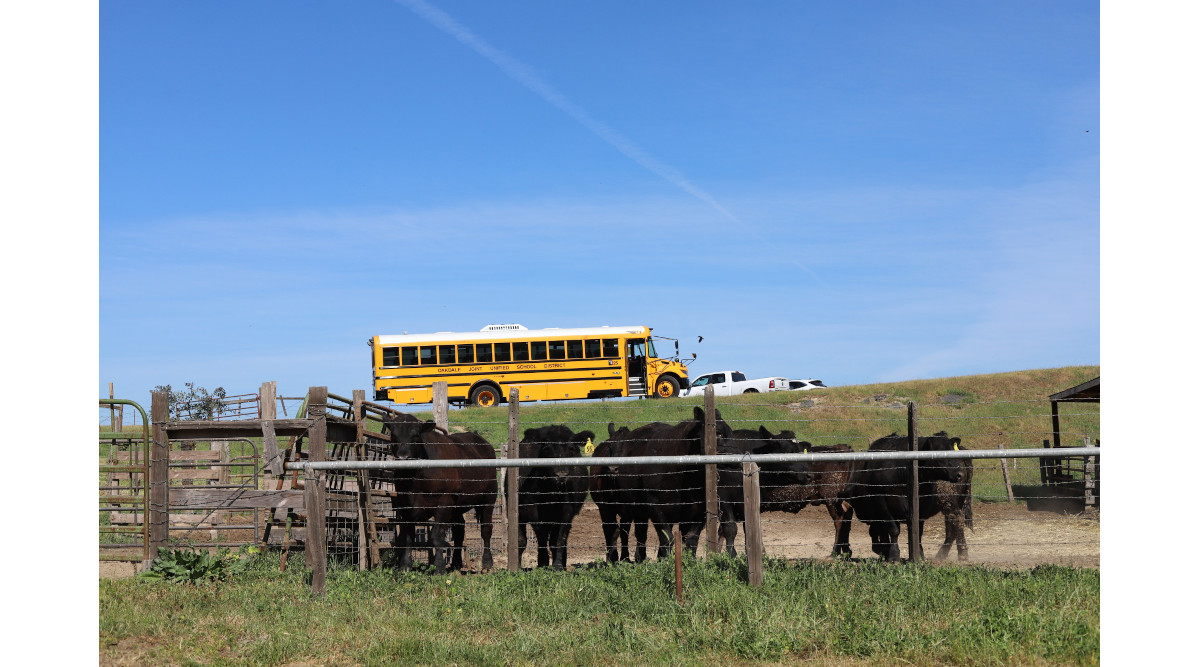
ROCKLIN, Calif. – As schools across California work to incorporate more locally sourced foods into their meal programs, many districts are increasingly exploring opportunities to source protein directly from producers. The California Ranch-to-Tray Tour helps bridge that gap by bringing school nutrition professionals together with cattle farmers and ranchers to better understand the path from ranch to tray.
“The school nutrition staff is a big part of the kids’ education because nutrition plays an important role in supporting their learning, growth, and development,” said registered dietitian Kori Dover, Director of Food and Nutrition Outreach for the California Beef Council (CBC). “School meals are often some of the most nutritious meals children receive, and school nutritionists play a key role in making sure students benefit from those meals by keeping them interesting and fun. As schools look to source more items like local beef for their menus, school nutritionists have some practical challenges to overcome.”
Specifically, they need to understand how the beef supply chain works and how the route goes from beef production to school meal programs.
The Ranch-to-Tray tour is designed to show the beef journey, from how the cattle are raised in California to how the beef is processed and ultimately served in school meals. The intent is to bring together school nutrition professionals and California beef producers to better understand each other’s roles and build connections in the farm-to-school space. “We wanted to make that pathway more visible, practical, and connected to real-world applications,” Dover said.
Last week, two days were dedicated to providing a closer look at how beef is produced and incorporated into school meals.
On March 17, forty-five attendees gathered in the Oakdale Central Kitchen of Oakdale Joint Unified School District (OJUSD) before heading to a local beef and dairy operation owned by the Hoekstra and Ardis families to better understand the early stages of the beef life cycle and the relationship between the dairy and beef systems. Attendees learn about animal care and daily management practices, the relationship between animal welfare and final product quality, and how dairy operations contribute to a more sustainable food system by using by-products and commodity feed sources, strengthening the relationship between dairy production and cattle.
Lunch was hosted on-site and featured a St. Patrick’s Day menu including smoked brisket stew, green beans, biscuits and fresh local honey, garden salad, and fresh fruit. The beef served at lunch came from Ardis Cattle Company, which sells directly to OJUSD, demonstrating how direct purchases to local beef schools have been implemented at the district level.
An afternoon panel Q & A session highlighted the importance of strengthening the connection between school meal programs and local producers, as well as opportunities available to support schools in local food sourcing. Jason Beach, Director of Cafe Services for OJUSD, said that “building direct relationships with local producers helps us serve high-quality food while also supporting our local community,” adding “local resources allow the district to invest in students and regional agriculture.” Ross Ardis, owner of Ardis Cattle Company, echoes that perspective, sharing, “It’s exciting to be a part of feeding local kids, especially knowing that our own son is one of them, and it’s a way for us to invest in our community.
The discussion also highlighted the support available to schools looking to expand local procurement. “There are resources and funding opportunities available to help schools incorporate more regional and local foods into their meal programs while supporting districts and producers as they navigate the process,” said Michael Ackley-Grady, Farm to School Regional Producer Engagement Specialist for the California Department of Food and Agriculture’s (CDFA) Farm to School Network.
On the second day, March 19, thirty-two attendees met at Chico State University for a tour of the Meat and Beef Lab with Haydn Clement, who showed how beef is processed into cuts for foodservice, discussed food safety and handling, and walked through fabrication practices. The lunch featured ground beef tacos prepared by the Columbia Elementary School District, along with Chico State produce from the university’s farm and fresh local fruit, highlighting how the school is incorporating locally sourced California ingredients into student meals.
“We don’t have to use a lot of seasoning on our taco meat because fresh ground beef has a rich flavor on its own, and our students really enjoy it. Paired with fresh salsa, it’s a meal students look forward to,” said Deanna Mertle, Director of Food Service, Columbia Elementary School District.
Over the course of two days, school nutrition professionals from twenty-five different school districts participated in tours, education, and networking. “The network between schools and beef producers is especially valuable,” Dover said. “Understanding where food comes from and how it fits in the food system is a key part of nutrition education, and it helps connect students to nutrient-dense protein sources, like beef, in school meals while strengthening communities across California.”
About the California Cattle Council
The California Beef Council (CBC) was established in 1954 to serve as the promotional, research, and educational arm of the California beef industry, and is mandated by the California Food and Agriculture Code. CBC’s mission is to amplify the voice of the California beef industry to strengthen the demand for beef through innovative promotion, research, and open communication. For more information, please visit www.calbeef.org.
About Cow Checkoff
The Cattle Checkoff Program was established as part of the 1985 Farm Bill. The checkoff assesses $1 per head in the sale of live domestic and imported cattle, in addition to a comparable assessment on imported cattle and beef products. The United States can retain up to 50 cents on the dollar and forward another 50 cents per head to the Cattlemen’s Cattle Promotion and Research Agency, which administers the national checkoff program, subject to USDA approval.
About the California Beef in Schools program
The California Beef in Schools program is a collaboration between the California Beef Council and the California Beef Council, and aims to empower youth to make informed food choices that support growth and development throughout their lives by providing learning materials about beef and its journey from pasture to plate. The mission of California Beef in Schools is to share education and innovative nutrition resources while uniting California farmers, ranchers, educators, and school food service workers to support their role in healthy lifestyles for California children. For more information, visit cakidseatbeef.com.
– California Cattle Council
#RanchtoTray #Tours #School #Nutrition #Professionals #California #Farmers #Build #Connections