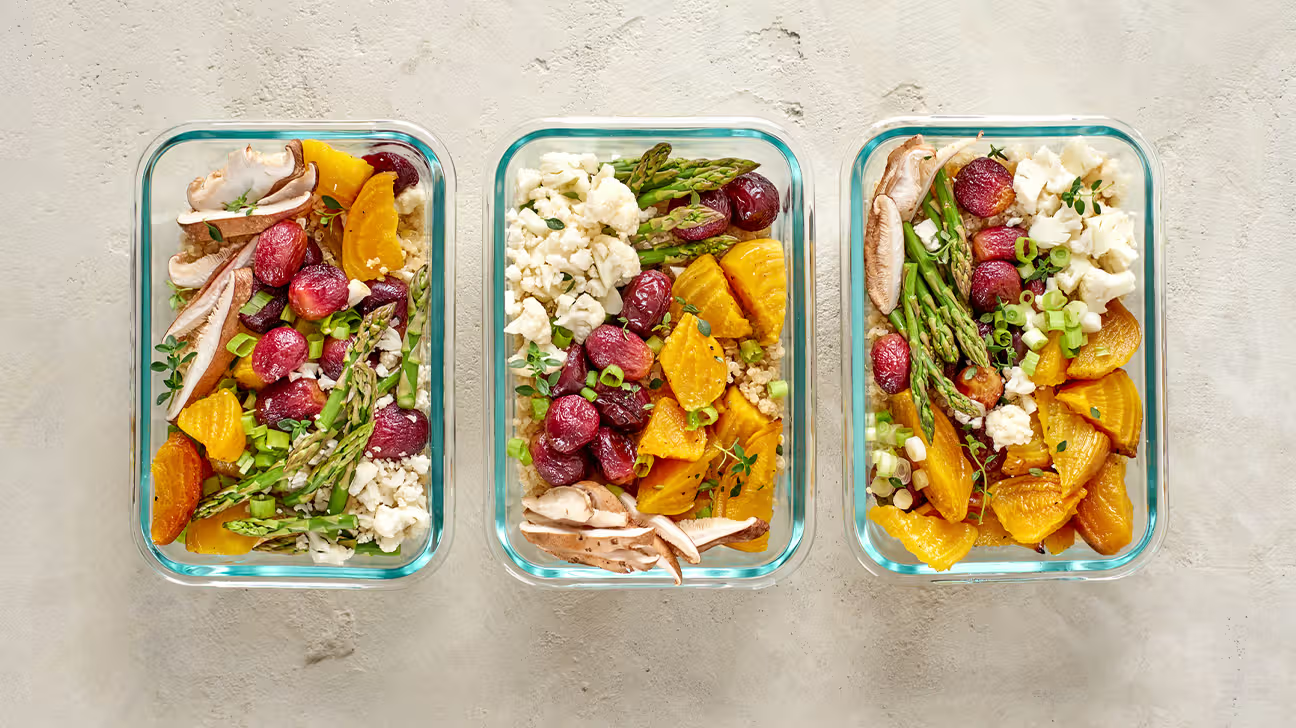
- A new study found that eating the same meal every day can lead to greater weight loss.
- Findings show that a consistent caloric intake helps with weight loss.
- The study did not establish a cause-and-effect relationship, but it did show a correlation between “go-to” foods, consistent calorie intake, and weight loss.
Having the same “go-to” meals and eating a consistent number of calories each day can help people lose more weight, according to new research.
Participants who followed a regular eating pattern lost more weight during the 12-week behavioral weight loss program than those who followed a more varied diet.
“There is compelling evidence to consider here that consistency and predictability in eating can help some individuals eat better and lose weight – but it is important to note the limitations, including self-reported data, a highly structured program environment, and an observational study design,” said Kristin Kirkpatrick, registered dietitian at The Cleveland Clinic Department of Wellness & Preventive Medicine and president of KAK Consulting. Kirkpatrick was not involved in the study.
The study analyzed real-time, detailed food logs of 112 overweight or obese adults enrolled in a structured behavioral weight loss program.
Participants tracked everything they ate each day using a mobile app. It also has a daily weigh-in using a wireless scale. To ensure the data reflected consistent behavior, the researcher focused on the first 12 weeks of the program. This is the period when people are generally most engaged and accurate in tracking their eating habits.
The researchers measured how regular each person’s diet was in two ways:
- caloric stability, or how daily calorie intake fluctuated from day to day and between weekdays and weekends
- dietary repetition, or how often an individual tracks the same meals and snacks over time
The research team found that people who repeated the same meals instead of eating a variety of meals lost an average of 5.9% of their body weight. This compared with a loss of 4.3% among those with a more varied diet.
“Consistency works best if the foundation is strong. If the meals are nutrient-dense, they can strengthen the high-quality nutrition. But if they lose key nutrients, you can consistently fall short,” said Kirkpatrick.
“In the real world, with travel, stress, and changing schedules, that level of consistency isn’t always realistic without structure or support,” she says.
The study also found that greater consistency in calorie intake was associated with greater weight loss results. For every 100-calorie increase in daily fluctuations, individual weight loss decreased by around 0.6% during the study period.
Findings suggest that simplifying food choices can help individuals form healthy, wholesome habits, even in challenging food environments. This may include rotating “go-to” foods and maintaining a steady caloric intake.
“Most people eat the same 20 to 30 meals several times each week,” says David Cutler, MD, board-certified family medicine physician at Providence Saint John’s Health Center in Santa Monica, CA. Cutler was not involved in the study.
“It is not surprising that successful weight controllers limit their food choices as well. And certainly, limiting those foods to healthier options and recognizing their calorie content will help in losing weight,” Cutler told Healthline.
Despite the promising results, the study does not show a cause-and-effect relationship, but a correlation. Factors such as motivation or self-discipline can also play a role in results.
Still, the findings show that when it comes to weight loss, consistency may be more important than variety.
According to the National Institute of Diabetes and Digestive and Kidney Disease (NIDDK),
Not every process will work the same for everyone. Consult your doctor about the best way to lose weight based on your condition and health status.
“The best place to start is with a truly personalized plan — ideally developed by a registered dietitian — that takes into account your preferences, labs, medications, genetics, and lifestyle,” says Kirkpatrick.
“There is no one-size-fits-all approach. The most effective plan is the one that works for you and your life,” he continued.
#Weight #Loss #Eating #Repeated #Meals #Increase #Weight #Loss