The Whoop deal is worth $10 billion, and while private market valuations can be notoriously fluid, that’s more than the public stock market value of four Boston-area tech companies — online auto site Cargurus, travel service Tripadvisor, cybersecurity firm Rapid7, and software company Progress Software — combined.
Lately, Whoop has also played a more visible civic role, lining up Governor Maura Healey for the public kickoff of a company-led private effort to attract more AI startups to the region.
It all adds up to Whoop taking a potentially critical leadership position in the local tech ecosystem. The company is “stepping into the breach to empower local communities,” said longtime venture capital investor Michael Greeley, general partner at Flare Capital in Boston.
Greeley compared Whoop, which he has not yet invested in, to an early wave of local stalwarts such as Internet pioneer Akamai Technologies, biotechnology leader Biogen, and marketing technology company Hubspot. The group “trained a generation of entrepreneurs and launched other great companies,” Greeley said.
Whoop was dreamed up about 14 years ago by former Harvard squash team captain Will Ahmed. He started by offering a screen-free wristband that athletes could wear to track performance and improve training and later marketed it to everyone from pro athletes to local high school teams.
But the market for elite athletes is not likely to be worth $10 billion.
Given the growing interest in health and wellness data, Ahmed hired the company’s first chief medical officer, primary care physician Dr. Pat Carroll, in 2022. And over the past few years, Whoop has expanded with a variety of consumer-oriented products and subscription services, including a wearable band cleared by the Food and Drug Administration to take electrocardiogram heart rate recordings, and a service to integrate blood test results into the customer’s health analysis.
The company also offers its bands in dozens of colors and styles and linked up with British fashion designer Samuel Ross to sell a line of limited-edition bands and workout wear.
Ahmed calls the combination of monitoring tools and analytics services a “personal health platform” that consumers can use to build, improve their physical well-being, and deal with chronic diseases. Instead of selling monitoring bands for a one-time purchase, Whoop sells subscriptions priced from $149 to $359 per year that include the band and online services (Whoop generated some bad press last year when it introduced an upgraded wristband but didn’t give it to some existing customers for free, as promised.)
The company currently has 2.5 million members and doubled its 2025 order, or money collected from customers in advance for subscription, from the previous year to more than $1 billion (Orders are recognized as revenue during the life of the customer’s membership).
The fresh cash infusion will help pay for 600 new employees, nearly doubling its current workforce of about 800. Whoop said it will also use the funds to expand overseas in Europe, Latin America, Asia, and the Gulf states.
Still, technology history is littered with failed consumer hardware companies. Pioneering smartwatch maker Pebble collapsed after a few years, as well as wearable maker Jawbone, while VR headset company Magic Leap chewed through billions of dollars of backing but never produced a hit product. And more recently, AI pin maker Humane AI flopped.
And as it expands into more consumer-oriented services, Whoop could face competition from tech giants with their own products. Apple’s smartwatch is the most popular in the world and has many of the same health tracking features as Whoop, while Google has Fitbit, one of the closest direct competitors to Whoop customers.
Analysts at Gartner predict the wearables market will grow at about 4 percent per year over the next five years to reach close to $100 billion in annual revenue. Adding generative AI to analyze data from wearables for coaching and advice, as Whoop and others do, could “enormously increase” the appeal of the device, analysts noted in a report last year.
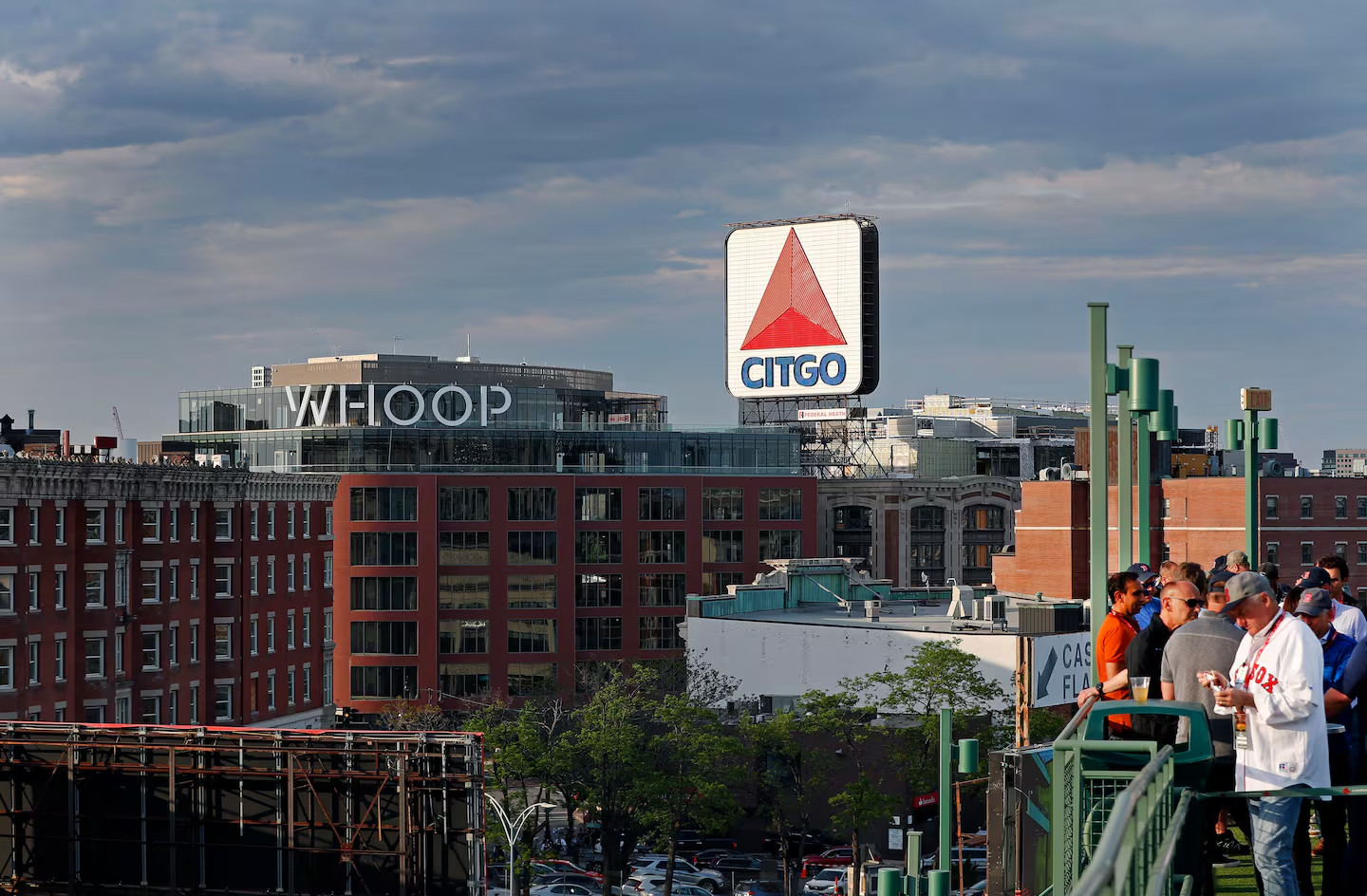
No shrinking violet, Ahmed has solidified Whoop’s presence in the local tech scene, and the sky. In 2023, the company moved to an eight-story headquarters building in Kenmore Square, with a large sign visible inside Fenway Park (under the shadow of the famous Citgo sign on the building next door) and along the Boston Marathon route.
This year, Whoop led the formation of the Massachusetts AI Coalition backed by dozens of local tech companies and VC firms. The goal is to convince more local school graduates and other entrepreneurs to found their AI companies in the country.
“The fact is you can build a good company here,” Ahmed told the Globe in a recent interview. “Whoop has proven that. A lot of companies here have proven that.”
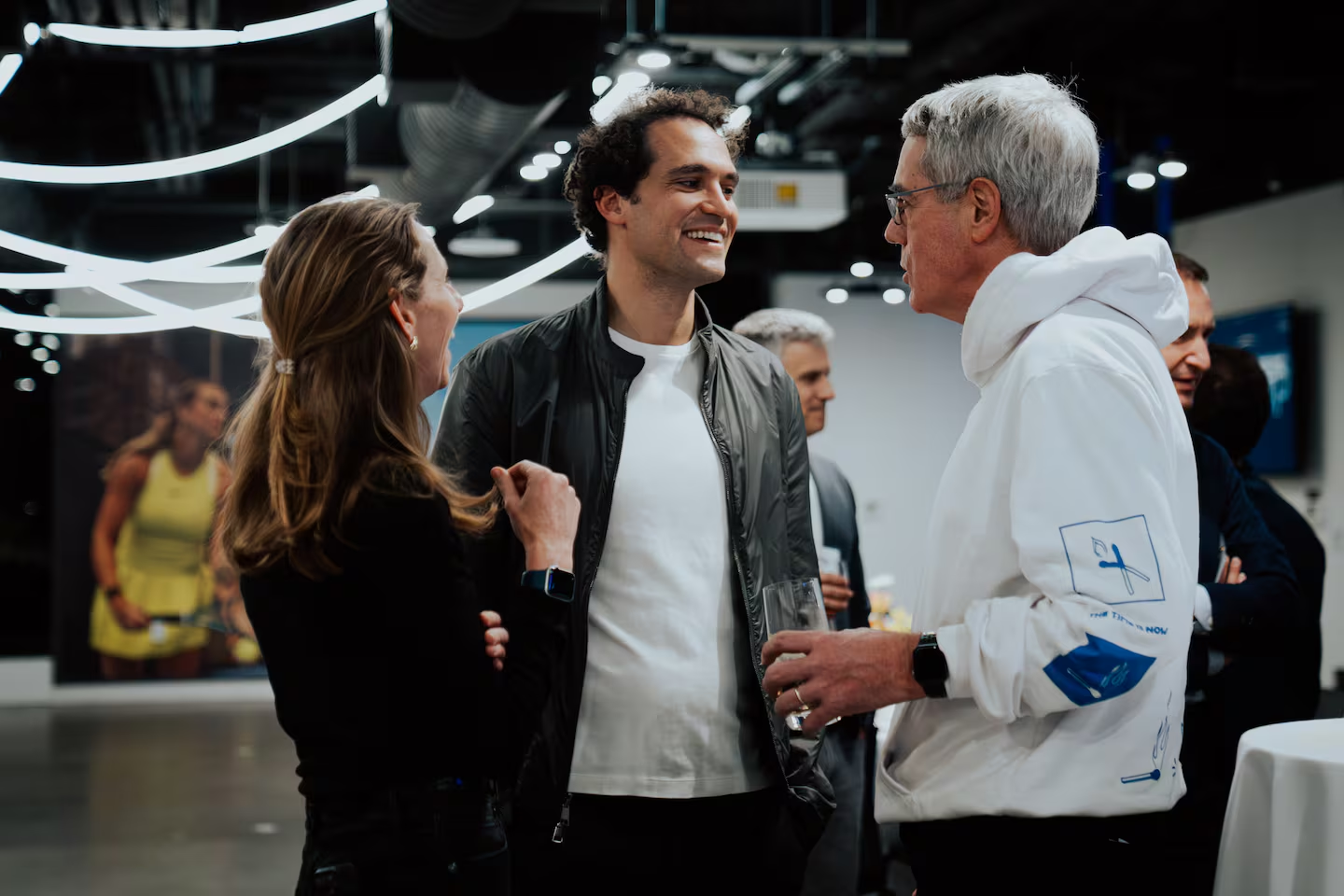
At the AI coalition kickoff event, in a modern outdoor meeting room on top of Whoop’s headquarters, Ahmed got a handshake from Governor Maura Healey and Healey’s economic development secretary, Eric Paley, himself a long-time venture capital investor who supported Whoop before joining the state government last year.
“I’m competitive — I don’t play squash like Will, but I played basketball in college — and I’m really competitive and I always remember people nipping at our heels,” Healey told the crowd, before announcing a deal to provide OpenAI applications to 40,000 state workers. “We are grateful that you are here. I thank you personally for being here and for building the opportunity.”
At some point, Whoop will likely go public, its regular listing on the stock market. In November, Ahmed said the company was considering the move “over a two-year horizon.” It may be prudent to wait out 2026, with the turmoil in the market from the war in Iran and plans by two or three of the largest private companies ever – SpaceX, OpenAI, and Anthropic – to launch IPOs.
But with a fresh $575 million infusion, Whoop should be able to pick a moment for that debut.
Aaron Pressman can be reached at aaron.pressman@globe.com. Follow him @ampressman.
#Whoop #valued #billion #securing #years #biggest #venture #capital #deal #Mass #startups #Boston #Globe