
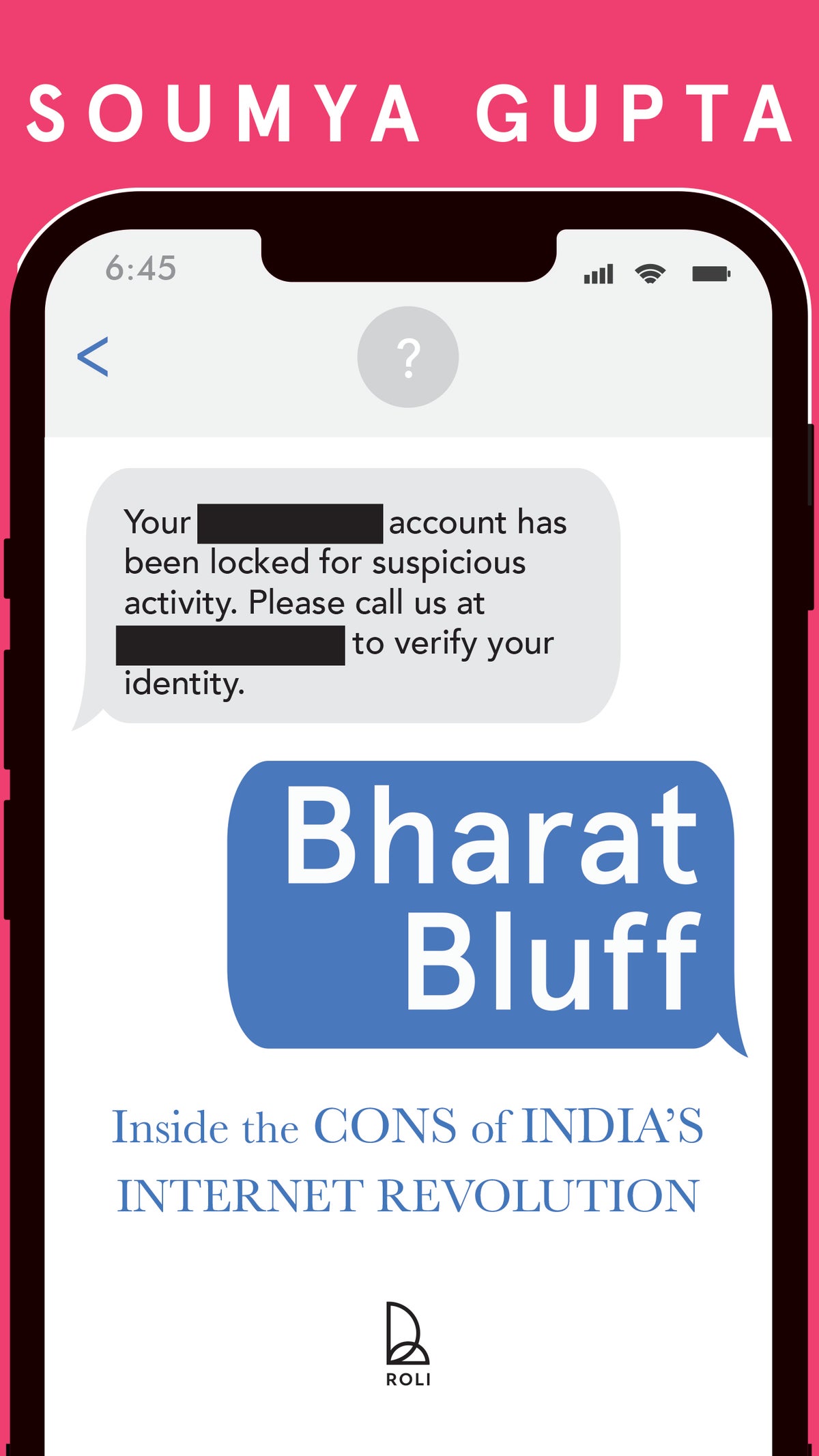
Think about your day: How many things did you do online? Perhaps you have made a couple of calls through WhatsApp. You have sent at least one WhatsApp text. You’ve probably seen a restaurant, office, or other location on Google Maps, maybe run a Google search, and used Gmail to send an email. You’ve probably created a shopping cart on Amazon after spotting a brand while scrolling through Instagram. On the way, until a WhatsApp message reminds you – “Where are you?”
Big tech companies increasingly run our lives. We rely on applications for many, if not most, of our basic tasks. As a result, we trust them to provide us with the right information, connect with our loved ones, bring the goods safely and get us places safely. It is a trust placed in a very small group of private, profit-driven companies. What happens if they are wrong? A lot of damage.
And it can happen to anyone. This happened to me and my partner.
To celebrate his birthday, my partner Vijay decided to throw a small party at our house. We reached out to our trusty neighborhood store, Seasons Wines. Over the past few years, Google has improved its search results in several ways with “cards” — a conveniently condensed group of all the information related to what you’ve searched for. For businesses, this card provides their full name, address, Google Maps location, and a helpful “call” button that links directly to their number.
So Vijay cranked up the Seasons Wine Shop search result and pressed the call. “Hi, I would like to order two bottles of red wine, one bottle of gin, one bottle of the new whiskey you suggested and six cans of my regular beer,” said Vijay.
“Yes sir, it’s Rs. 10,671. Pay with Google Pay and then we will send the order,” said the voice on the other end.
“Usually, I use my credit card with the delivery person,” said Vijay.
“Yes sir, but this is a big order. We have started a new advance payment policy for these orders,” said the person on the phone.
Seasons Wine has never asked us to prepay an order. But we have never placed such a big order. We sent the full amount in the contact number to Google Pay.
An hour passed. “Where’s the alcohol?” I asked Vijay.
Vijay called back. “Sir the order is ready, but since it is a big order, you need to give your clearance number,” said the guy.
Now my antenna was up. Seasons never heard that. Something went wrong.
I took the phone from Vijay. “What is this permit?”
“Madam, you have to pay 25,000 rupees for Maharashtra government liquor license, otherwise 1,000 rupees for one time permit,” replied the guy. “Otherwise, we can’t deliver to you.” The figures looked correct, but now I suspected we were being scammed.
“It’s okay, you don’t deliver, I’ll come and pick it up myself,” I said. Seasons Wine was 800 meters from our apartment.
“No ma’am, we don’t deliver from the store, all orders are delivered from our godown” replied the guy.
“Where’s Gotown? I’ll be there,” I replied. Now I know we may have been duped.
“Ma’am, there is no permission to enter the godown, you have to pay for the permission,” said the boy.
I was furious. I started with a selection of expletives. Click on The queue went quietly.
For most of us, the Internet is a collection of applications and websites operated by a handful of large American tech companies.
I dialed again, but the call didn’t go through. I went to the WhatsApp account he had messaged. No messages are sent. We were blocked.
Meanwhile, Vijay walks up to Seasons Wine Shop. “Hey, I just called this number of yours and ordered it, but the guy says it’s in a cotton? Where’s my order?”
Seasons’ wine merchant groaned at the number. “Hey sir! You too?” He pointed to a large, prominent notice with that number printed in big, bold font on the front of the store. “Many customers have complained to us! We’re tired of complaining to Google about this. Don’t call this number. It’s not ours.”
And it was. There was nothing we could do except report to the police. I heard how difficult it can be for the police to take cyber fraud complaints seriously. Besides, I reasoned, we were wrong. We willingly transferred money to an account. Maybe the police say the same?
That night, I saw that Vijay had meticulously typed and saved the correct phone number of Seasons Wines. I went to the business’s Google listing and reviewed it, alerting others that the number listed on the business listing was fraudulent. Many others have issued similar warnings. We never bothered to check.
For most of us, the Internet is a collection of applications and websites operated by a handful of large American tech companies. We buy smartphones running Android (Google) or iOS (Apple), download apps from Play Store (Google) or App Store (Apple), chat with our loved ones (Meta) on WhatsApp (Meta), use Instagram, stay in our social circle (Meta), watch videos on YouTube (Google), navigate using Google Maps or use Google Search. We use Gmail (Google) or Outlook (Microsoft) on our Windows laptop (Microsoft) to communicate with each other. More than a third of all UPI transactions are on GPay (Google). We shop online on Amazon or Flipkart (owned by Walmart), and more than 40% use PhonePe to make UPI payments (FlipkartFlipkartFounded in 2007, Flipkart is one of India’s oldest e-commerce companies and is owned by Walmart.Read more/Walmart). 80% of online ads run on networks owned by Google and Facebook (Meta).
We implicitly rely on the systems and processes that companies such as Google, Meta and Amazon use to verify the people and businesses operating on their platforms.
For most Indians, internet = big tech companies. Our web experience is designed by these companies, and we consider anything that can be traced or verified by them to be safe and authentic. We trust a business more if it is listed on Google or Google Maps. With this credibility, these businesses can convince us to hand over our personal data and our money.
We implicitly rely on the systems and processes that companies such as Google, Meta and Amazon use to verify the people and businesses operating on their platforms.
On most days, it significantly improves our quality of life. But it also means that we often don’t stop to check information. In the pre-internet and pre-social media era, doing business with a new company involved a healthy dose of skepticism and background checks. Paying someone we don’t know is an elaborate process. If you were a child of the pre-internet era, you probably remember sitting down to make your first online transaction with a credit card at a large desktop. These were family affairs where everyone was hyper-vigilant checking the stability of the dial-up connection, making sure card details were entered correctly and the PIN button was not pressed by mistake. All to ensure that one does not lose their money online.
That skepticism is slowly fading away as we place more and more trust in Big Tech. Almost every scam exploits the access and means of Big Tech companies and our implicit trust in them. Fraudsters use our online data, which is shared and stored with Big Tech companies and banks. They use apps and systems owned by these companies to target us. It is not only in India; The debate is happening worldwide, and governments are making rules about who to blame when someone gets scammed online.
Google India has been conducting public awareness campaigns to warn people against digital fraud. Google has integrated Google Pay into India’s National Cybercrime Reporting Portal to help victims report crimes faster. It also joined the Safer Internet India Alliance, a group of digital services, telecom and fintech companies. Meta is a member of this alliance, as are Microsoft and other companies.
Almost every scam took advantage of the access and means of Big Tech companies and our implicit trust in them.
Meta also runs public service campaigns to educate people about common pitfalls such as lottery scams, stock tips scams, fraudulent loan applications and fraudulent texts from scammers impersonating loved ones.
Businesses on WhatsApp can now be verified with a blue tick, and in October 2025, the company introduced a feature that alerts users when they share their screen in a video call with an unknown number — a common tactic used by fraudsters.
Despite this, big tech companies have not been able to stop online fraud. Between January and March 2024 alone, more than 43,000 cybercrimes misused WhatsApp, a top platform for fraudsters. Another 22,680 crimes involved Telegram, and another 20,000 involved Instagram.
So, what can the government and big tech companies do to stop fraudsters? The long-term solution may be to design laws that fix accountability on institutions and people who fail to protect people from victimization. But until that happens, the best we can do is make sure we understand the way Big Tech works, recognize a cheater, avoid greed and temptation so cheaters can’t get into our heads.
#Big #tech #big #cons #Fraudsters #hiding #apps #life #easier