
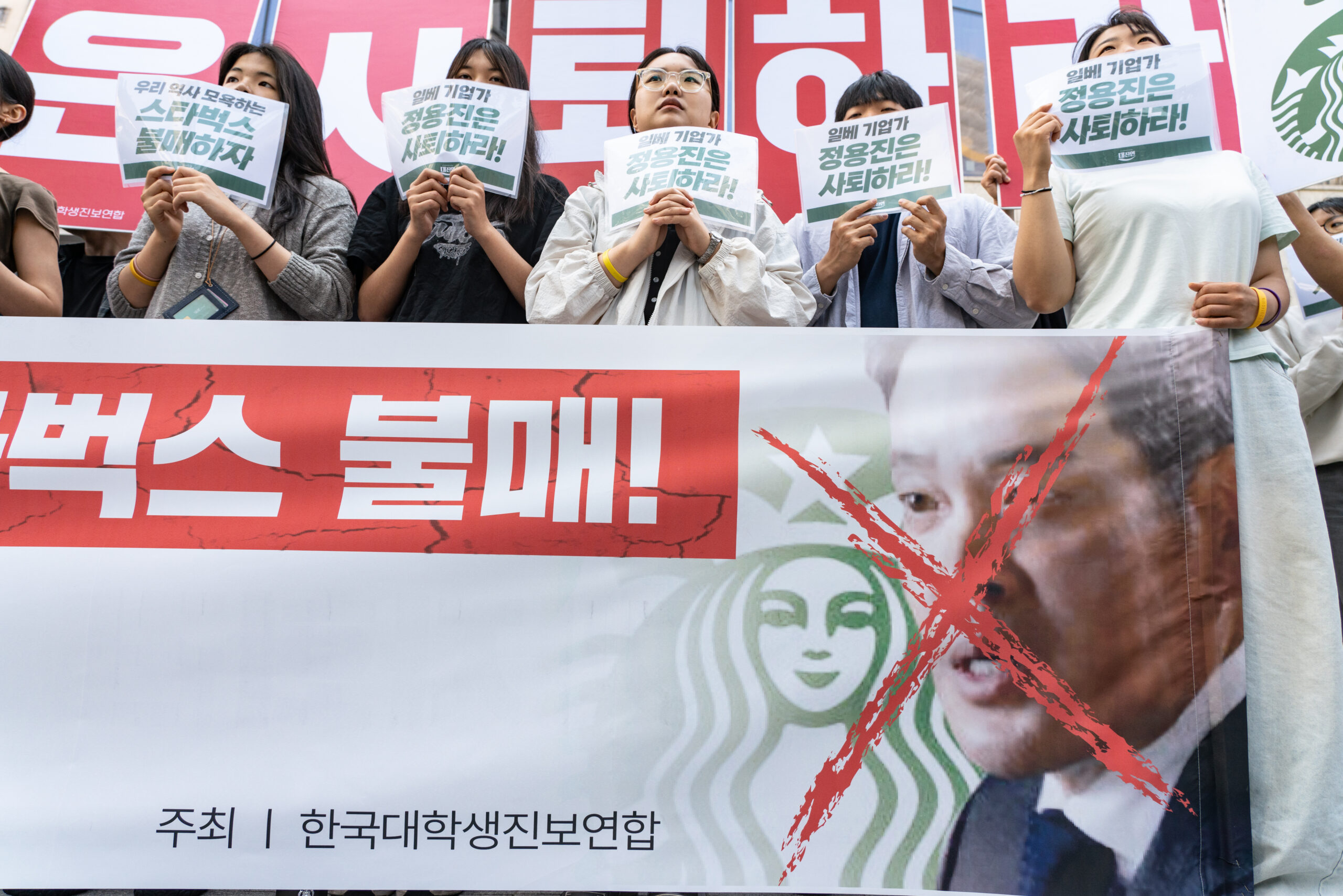
The Starbucks Tank Day fiasco in South Korea deserves a place in future editions of the best branding books as an example of what can happen when a major global brand operates without a keen awareness of the cultural and political context. It’s devastating to the coffee chain’s reputation in the third-largest market by number of stores, and it’s unlikely to be forgiven anytime soon.
As the dust settled, along with shattered Starbucks cups and tumblers, the apology was reiterated and a scapegoat emerged. Unsurprisingly, you shouldn’t rely on AI to write your marketing slogans, but Starbucks’ Tank Day disaster can’t be entirely blamed on chatbots.
For those who missed the confusion, Starbucks South Korea, operated by Shinseke Group, launched a promotion featuring large ‘Tank Series’ tumblers. ‘Tank Day’, as it was called by its English name.

But there was a fatal oversight at the time. The campaign was launched on May 18, the anniversary of the 1980 Gwangju Uprising, or democratization movement, during which military dictator Chun Doo-hwan sent tanks and armored personnel carriers into the streets to quell protests. It is estimated that between 200 and 2,300 people were killed.
To make matters worse, the campaign’s slogan, which translates to “wash on the table”, reminded people of a phrase infamous for the death of a student activist in 1987. Officials said Park Jong-chul died after an officer “hit the table with a broom.”
Starbucks canceled the campaign within hours as people protested outside stores, smashing Starbucks tumblers and mugs and removing their loyalty apps altogether. Since then, government ministries have vowed to drop Starbucks from public events, delivery workers’ unions have said they will refuse orders, and the country’s president, Lee Jae-myung, has described those responsible for the campaign as “low-class merchants.”
Shinseke fired Son Jeong-hyun, the former chief executive of Starbucks Korea, and the board chairman apologized on national television.
An internal investigation was also conducted. According to YonCap News, there is no evidence of intent to refer to the historic massacre. It also found that the controversial slogan was suggested by an AI chatbot.
Some people are quick to blame AI, as if it explains everything, but it’s like Photoshop retouching a batch or an Excel spreadsheet miscalculating the budget. The fault lies with the user.
By now, most people working in branding and marketing have probably used an AI chatbot as a potential source of ideas. They know that initial suggestions can range from the trivial to the downright weird. Using AI on autopilot isn’t an option, but some managers who approved the Starbucks campaign reportedly didn’t open email attachments with marketing material.
Marketing turnarounds are coming faster and faster, and some brands seem to be treating social media campaigns with a casualness unthinkable in traditional media. In a post-truth world that can be replicated in an instant, campaigns are being signed off on faster than ever.
Fewer people doing more is a problem AI needs to solve, but there are old lessons to remember. Groupthink, described by social psychologist Irving Janis in the 70s, has been blamed for various failures such as the US government’s escalation of the Vietnam War and Pepsi’s Kendall Jenner commercial.
A group’s drive to reach consensus can lead to poor, irrational, decision-making. That risk increases when at least one member of the team is an AI. Who wants to call a technology that the CEO believes is the solution to everything? But today more than ever, branding requires multiple layers of careful analysis, questioning every idea whether it comes from a human or a machine.
#Starbucks #disastrous #branding #failure #blamed